Showing posts with label Emotional Literacy. Show all posts

Sunday, May 24, 2026

Your Blindspots May Be Creating Your Biggest Problems

Many of us make decisions by unconsciously balancing 4 things: 

1. Is it practical and workable in the real world?
2. Does it make logical sense and fit the facts?
3. Does it keep the people around us happy and maintain relationships?
4. Does it feel right to us and help us sleep at night? 

The challenge is that these 4 things do not always line up.

If we neglect ourselves, we risk burnout.
If we neglect relationships, we risk conflict and disconnection.
If we neglect facts and reality, we risk poor decisions.
If we neglect practicality, we risk getting stuck and taking no action.

We all have blindspots. Some people naturally lean towards logic and problem solving. Others naturally lean towards people and emotions.

Part of good self-care is good self-awareness.

It is worthwhile to reflect on our recurring struggles as it can point out our specific blindspots? Knowing them can help guide us towards better solutions including specific skill building or collaboration with those who can scaffold for our blindspot/s and we can scaffold for theirs. 

Friday, October 10, 2025

Emotional Literacy — The Language We All Need to Learn

In counseling work, I often explain to patients that feelings and emotions are like a language.

Some people understands very little of it.

Some people understand a bit and say a bit.

Some people can understand a lot but can’t speak it very well.

Some people are very fluent at it through deep understanding and expression.

Some people use this language well with others but not with themselves. 

Part of counseling is to reflect on what level we are at in the “feeling and emotional language”. From there, both acceptance and pivot for change with clarity is important.

If we cannot understand or speak French, and our context requires us to understand or speak French, then we need to consider learning French.

The same goes for the “Feelings and Emotional Language”.

Saturday, October 4, 2025

Is It Intuition or Emotion? Learning to Tell the Difference

In counseling, one of the key skills in understanding your feelings is learning the difference between an intuition and an emotion.

They can both feel similar, but they serve different purposes.

So what is an Intuition?

Intuition is like your inner knowing — a calm sense or “gut feeling” that gives you information without needing strong emotion.  It’s often steady, quiet, and reliable.  You might not know why you feel it, but it often turns out to be true or helpful.  Think of it like a fact in your feeling language — it gives clarity. 

What is an Emotion?

Emotion is a stronger reaction — like anger, fear, excitement, or sadness.  It often comes with a body sensation (heart racing, tense shoulders) and a push to act — to say or do something right away.  Emotions are less steady, more changeable, more subjected to biases, and can shift depending on the situation.  They’re not bad — they give us energy to act — but they may not always be the best guide for clarity and decision making. 

An Easy Analogy:

If intuition is like a fact, then emotion is like an opinion or judgment about that fact.

Facts give us clarity.

Opinions give us motivation — but they can also change quickly.

In the ACT (Acceptance and Commitment Therapy) framework, when we’re fused with emotion, we feel pulled to act right away — we’re caught up in the story or feeling. 

When we defuse, we step back, breathe, and notice the feeling without reacting — we get more space to have more clarity and choose what matters.  This is being mindful with feelings. 

So, when your feeling is steady and calm, that might be intuition.  When your feeling is strong and urgent, that’s more likely an emotion.

So next time you feel something, ask yourself: 
“Is this a calm knowing… or a strong urge?” 

That question alone can help you respond with clarity rather than impulse.

Saturday, March 18, 2023

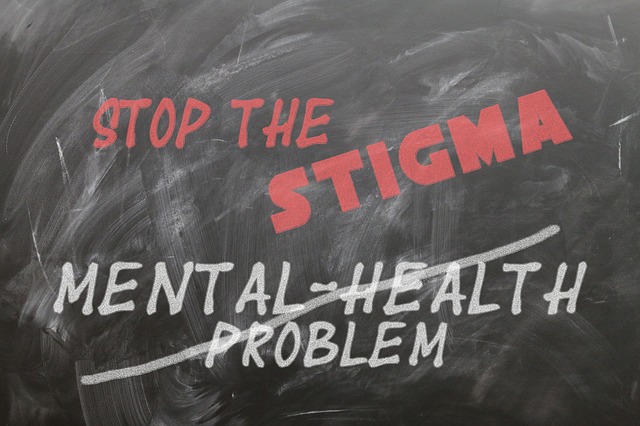
Exploring alternative perspectives to common mental health labels


It’s common for stigma and unhelpful judgements to be attached to those with “mental health” issues. 

If one has a body, one will have some kind of physical health issues. Likewise, if one has a mind, then one will also have some kind of mental health issues. None of us are immune to this are we?

I sometimes prefer to use different terms to describe some of our common mental health diagnoses to reduce stigma, judgements, or to offer an alternative description of the problem perhaps.  It can normalize it to some extent. 

Borderline Personality Disorder to “Emotional Personality”

Attention Deficit Disorder to “Curious and Distractible Personality”

Depression/anxiety to “Adjustment issues with stress response”

ODD to “Inner compass personality”

ASD to “Logical or a more emotionally defused personality style”. 

I also find these especially helpful when taking a transdiagnostic approach to treat mental health issues.

Saturday, May 14, 2022

Better emotional literacy for better mental health


When we explore “poor emotional regulation”, it’s important to explore which part of emotional regulation is problematic. Is it a difficulty around processing the feelings of others, or is it a difficulty around processing one’s own feelings, or both?

Good questions to ask are….

1. Are we too “zoomed in” or fused with other people’s feelings leading to excessive empathy, over pleasing, emotional sensitivity from others, mood fluctuation, poor self esteem, excessive peer pressure, and other unintended consequences?

2. Are we too “zoomed in” or fused with our own feelings leading to impulsivity, mood fluctuation, stubbornness, inflexibility, self centeredness, and other unintended consequences?

Some of us are great at processing the feelings of others, but are not great with our own feelings.  Some of us are great at processing our own feelings but are not great with the feelings of others.  Some of us are not great with processing feelings in general. We simply don’t trust “feelings”. We may be much more data driven or “logical” in nature.  

Improving emotional literacy and learning how “to hold” those feelings “more lightly” may help. 

We don’t always to have to act on those feelings straight away.  Often, we don’t even have to act on them at all. They may be there to be observed, noticed, and processed if relevant, before taking action. 

It’s not an easy thing to do at all, but it’s super important to learn for our mental health and wellbeing.

Saturday, April 30, 2022

Leading with both thoughts and feelings


Being able to sense other people’s feelings or empathy is great isn’t it, but at times, it can work against us too if we are not careful or unaware.

Why?

Imagine if someone is angry with us. We then can sense their anger. We then hold their feelings with the anger we sense. They then sense our anger, and now we may have an escalation of two angry people.

Same goes with sadness and anxiety. We may end up with two very sad or anxious people too.

So how can we mitigate this?

Consider holding other people’s anger, anxiety, or sadness with care, hope, and compassion instead. If they can then sense our care, hope, and compassion, they may then be able to use those feelings to hold/shift their own feelings.

We sometimes lead with our thoughts, but don’t forget to lead with our feelings too.

Feelings are “contagious” and can be “transmitted” in both ways.

Sunday, February 6, 2022

Start teaching emotional literacy early to prevent mental health problems


When managing mental health, we can use the DSM framework or a "process based" framework.

What is the underlying process of the mental health challenges?

Sometimes we don’t have to commit to a DSM diagnosis of depression or anxiety to help people process their feelings and thoughts. We don’t have to wait for a full blown expression of depression or anxiety before we can take action.

We can improve our patient's mental health by helping them at anytime to "zoom out" or defuse from the thoughts and feelings that don’t matter to them or is not within their locus of control, and "zoom into" the stuff that really matters to them or is within their locus of control. This creates psychological flexibility rather than psychological rigidity.

Start early.

This is part of emotional literacy. We don’t wait for people to be illiterate before we teach them about literacy, so why wait for depression or anxiety before we teach them about emotional literacy.

Prevention is better than cure.

Saturday, January 8, 2022

Following one’s thinking, principles and values when healthy, is not the same as “selfishness”


When one is following one’s thinking, principles, and values, it may seem “selfish” to some folks, especially for folks who tend to do the opposite and follow the thinking, principles, and values of others and society for social functioning. 

Of course, both have a lot to learn from each other for balance. Any extremes can have their own set of problems.

When HEALTHY, one of the main benefits for those who focus more on their own internal thinking, principles, and values, is the intrinsic appreciation and acceptance of others for who they are.

I want to be “me”, and I would love for you to be “you”. We may not agree, and at the same time, I can be “me”, and you can be “you” too. I want that for you.

It’s only “selfish” when I want to be “me”, but you can’t be you and I want you to change for “me”.

Saturday, December 18, 2021

Emotional literacy around how we think and process information


Have you noticed the following?

Some of us are great at processing and working with other people’s feelings. We are very tuned into the feelings of others. Our decision making is heavily influenced by the feelings of others. 

Some of us are great at processing and working with external rules and variables to make things workable. Workability is very important to us. We are more practical by nature.

Some of us are great at processing and working with our own internal rules and principles, and do things that make logical sense to us rather than relying on our feelings. We are more logical by nature.

Some of us are great with processing and working with our own feelings and values, and to stay authentic, true to who we are, and to maintain inner harmony.

Which one of the above do you struggle with the most?

Much of counseling is to help us “fill in any of the missing gaps” above.

Monday, November 22, 2021

How can we improve our motivation for positive change


In counseling and coaching, motivation is critical for change to occur because without motivation, one’s knowledge, resources, and skills cannot be mobilized. 

So how can we improve it?

1. We can try to link the “new desired behaviors” to their values and what’s relevant to them. When it’s linked to their values, it’s more emotive, motivating and sustainable.

2. We can try to increase the perceived rewards for doing the “new desired behaviors”.

3. We can try to reduce the perceived rewards for keeping the “existing unhelpful behaviors”.

4. We can try to increase the perceived pain and negative consequences for keeping the “unhelpful behaviors”.

5. We can try to reduce the perceived pain and negative consequences for taking on the “new desired behaviors”.

6. We can do a combination of the above. We can frame the rewards as a “pull motivation”, and pain/consequences as a “push motivation”. Often we have to do a bit of a pull, and a bit of a push all at the same time. How much of each, depends on their personality and context.

Saturday, November 20, 2021

What’s is the difference between a punishment and a consequence


With parenting support and counseling, we often explore with parents about the difference between a punishment versus a consequence. 

This is important for the workplace as well, especially for those in management or leadership positions.

A punishment is emotive. Usually, it’s done with judgement, frustration, reactivity, or anger.

A consequence on the other hand, is often more emotionally neutral or compassionate, and less judgemental.

Why is this important?

When a punishment is perceived by the the child who is on the receiving end, it impacts on their connection/attachment with us. It may give them a message that the connection is “conditional” upon that certain expectation is met.

With “consequences” as the “optics”, it’s saying this has nothing to do with our relationship. I love and care for you no matter what. At the same time, these are the consequences to what we have done. That is life. But no matter what happens, I still love and care for you no matter what.

Not easy of course, especially when our needs are not met, and we are stressed due to life’s craziness. Parenting is truly the toughest job in the world. 

We make mistakes. We learn. We grow.

Wednesday, November 17, 2021

Using values in a more conscious way to guide our actions


In counseling, we often see “values” as a very powerful tool to guide people’s actions and behaviors. 

Values around justice and equality. 
Values around competence and excellence. 
Values around duty and responsibility. 
Values around freedom and autonomy.
Values around fun and novelty.
Values around compassion and kindness to name a few. 

Like any tool, we can use it consciously and with precision, or we can use it unconsciously and reactively. 

If we use a knife consciously and with precision to prepare food, then it’s wonderful. If we use the knife unconsciously and reactively, then it’s extremely dangerous. 

So what is the key point?

We often see people in the home, groups, and society, fighting/debating over the “utility of a value”, but often fail to debate over the “mindsets and skills” of the users. 

It’s like arguing over the usefulness of a knife or a drill. No one can deny that those are very useful. But if we give it to a young infant, then that may be a terrible idea. 

In history, we have seen “equality and justice” done badly at times. 

But if “equality and justice” can be done consciously, with the right mindset, with precision, and not reactively, then we may have a better world. 

The same goes with our other values and beliefs.

Tuesday, November 16, 2021

Learning to find balance


In counseling and coaching work, we often see folks at the extremes of various traits, and so we try to to help them “rebalance” that for better workability and adaptation.  

We see folks who see the world through “extreme logic”, and rely very little on “feelings”, so we help them to follow their heads but take their hearts with them. 

We see folks who see the world through “intense feelings”, and rely very little on “logic”, so we help them to follow their hearts but take their heads with them. 

We see folks who are extreme at following the “outer compass” or the crowd, and lose touch with who they are, so we help them to find themselves, their principles, values, and follow that more. 

We see folks who are extreme at following their “inner compass”, and forget that they do have to adapt to the world and conform at some level to function.  So we show them “outer empathy” and “group think” when required. 

As Family Doctors or Mental Healthcare Professionals, we have to be “multilingual” in order to understand and speak your “language”, and show you the other “languages” to balance, or at least understand and appreciate. 

How do we measure our self worth?


I often ask patients to do the following exercise as homework. 

Finish off these sentences for me....

1. I feel significant or adequate when .....
2. I feel insignificant or inadequate when .....
3. I am significant or adequate because .....

The common answers to the first question are....

When I achieve.
When I can be of service to others.
When others accept me.

The common answers to the second question are....

When I fail.
When I can’t help others.
When others reject or dislike me.

The common response to the third question is....

“I am not too sure”. They often struggle with this one for some reason.

It’s no wonder why so many of us have emotional vulnerability. Self esteem purely based on achievements, being of service to others, and how others feel about us, can be very fleeting and unstable.

Consider finding multiple ways of measuring our self worth, including values like kindness, authenticity, simply being who we are, growth focused, loyalty, curiosity, responsibility, hardworking which are less dependent on achievements, popularity, or other people’s opinions.

Once we feel significant, adequate or “enough”, it’s a great foundation from which we can face life’s many challenges.

Maybe you should try to answer those questions too.....

Wednesday, November 10, 2021

Fix the stuff at the core rather the stuff on the surface


In counseling, we get the big “wins” from time to time.
These are the times when we can “collect the harvest” after “planting the seed”, nurturing and watering it.

One of those moments is when our patients make a shift from “I am not enough” to “I am enough”.

When this happens, everything in their life may suddenly change. On close analysis, nothing at all may have changed. The dramas are still there, but their perspective and relationship with the dramas may have changed.

So what’s the main point?

Fix the stuff at the “core belief” level or “behind the curtain”, and the stuff in the front of the curtain will organically change, or at least can be changed, with less difficulties.

Thursday, November 4, 2021

How to leverage for better health


In golf, a small shift in the angle of the swing, will lead to a much bigger difference in the distance at the end point. A small shift at the core, will lead to a bigger shift on the surface. 

So in counseling, we try to fix the problem at the core rather on the surface. Behind the curtain rather than what’s in front of the curtain. It’s more efficient and effective that way.

Imagine if we can shift these 3 core beliefs for people.

1. From “I am not good enough” to “I am enough because I am who I am. I am not perfect but I will learn and grow throughout my life.”

2. From “toxic shame” and “I am not lovable” to ”I am lovable or likable”.

3. From “It will never change” to “Things can change in any given moment”.

What would the world look like then? 

Will we be healthier physically, emotional, and socially?

Wednesday, October 20, 2021

What is counseling in a nutshell


Going to counseling can be a bit daunting and scary for some people, so I often try to simplify it.

So what is counseling in a nutshell?

We show people strategies or “brain hacks” to “zoom out” on the things that don’t matter, or things that matter but we have no control over.

AND

We help folks to “zoom in” on the things that do matter, to create a life that is meaningful, true to who we are, AND at the same time, workable in the real world.

It’s not too mysterious. 

Some may think that it’s only relevant for those with a “mental health disorder”.  But it’s not.  It’s relevant for everyone really.  

Friday, October 15, 2021

To improve our lives, we have to see and fix the “stuff behind the curtain”, as well as the “stuff in front of us”


In counseling, we often need to see what’s in front of the curtain, AND what’s behind the curtain as well. 

If we see anger in front of the curtain, behind the curtain might be shame and disconnection.

If we see an avoidant partner in front of the curtain, behind the curtain might be, someone who has given up on trying to make their partner happy. They feel like a failure in some ways.

If we see a demanding and critical partner in front of the curtain, behind the curtain might be extreme sadness, disconnection and loneliness. They are desperately trying to reach out and bid for connection, but going about it in a non helpful way.

If we see a child misbehaving in front of the curtain, behind the curtain might be a child who feels disconnected from his/her family or friends.

We can try and fix the things in front of the curtain, but if we don’t address what’s behind the curtain, the problems will recur.

Saturday, October 9, 2021

Loss is inevitable so how can we work through our losses


Bad things happen. It’s inevitable isn’t it?

When faced with a loss of some sorts, for example, loss of money, job, loved ones, independence, relationships, or good health, we may recognize the following stages that we can experience in ourselves. 

1. Disbelief. 
2. Stress with fight/flight responses. 
3. Acceptance and “at peace” with the loss. 
4 Adaptation with possible post traumatic growth. 

Asking what stage/s we are mainly in is an important question. 

Most problematic scenarios including PTSD, depression, anxiety, and adjustment disorders, occur when we are “stuck” in stage two with the flight/fight responses. It’s very emotionally draining. 

Once we realize that the “fight or flight” response is ineffective for moving forward, we can consider an alternative path of acceptance, assertiveness, and growth. 

Consider pivoting for emotional acceptance in stage 3, and creating a value driven life that we want in stage 4, with our new founded insights and experiences. 

Stage 4 is our post traumatic growth.  It’s the alternative to post traumatic distress. 

Sunday, August 29, 2021

Learning how to forgive is not an easy thing but is very important for our own mental health and well-being


“How to forgive” is often one of the most difficult things for people, even for those who actually want to forgive. It can be a common source of pain and suffering for us. 

Forgiveness is sometimes more about understanding, what’s the underlying beliefs that are holding us back from letting something go. Once we have clarity around that, we can defuse, zoom out, or “make room” for them. We may even be able to change or fine tune these beliefs over time.

So what are the common culprits?

1. If someone does something wrong, they must be punished or have consequences.

2. Life should be fair. We must have justice.

3. Letting go is the same as giving up.

4. It’s unfair. Why do I have to let that go.

In the words of old wisdom.....

“Holding on to anger or resentment, is like drinking poison and expecting the other person to die”.

So consider letting it go. It will lighten our load to focus on the things that we can change or matter to us at this point in time. We are doing it for our own mental health and well-being.