Showing posts with label Asperger's. Show all posts

Sunday, April 13, 2025

Feeling Like a Fish Out of Water? 3 Domains to Understand Neurodivergence and Thrive


Understanding Neurodivergence: A “Fish Out of Water” in School and Family Systems


When I screen for neurodivergence—whether it’s ADHD, ASD, or related conditions—I often frame it as a mismatch between an individual and the systems they’re navigating, like school or family, especially in their younger years. It’s a classic “fish out of water” or a “Mac in a Microsoft world” scenario: the environment isn’t wrong, and neither is the individual—it’s the lack of alignment that creates challenges.

I break this mismatch down into three key domains of maladaptation. When someone shows extreme traits in these areas, it can signal neurodivergence, often accompanied by secondary issues like anxiety. Let’s explore these domains and what they mean for understanding and supporting neurodivergent individuals.

Domain 1: Thinking-Biased vs. Feeling-Biased

The first domain looks at how someone processes the world—are they more “thinking-biased” or “feeling-biased”? A thinking-biased individual leans heavily on objective, logical variables, while a feeling-biased person prioritizes emotional, values or relational cues.

If someone’s balance is fairly even—say, 50:50, 40:60, or even 30:70—they’re likely to adapt well to most environments. But when the split becomes extreme, like 90:10 in either direction, adjustment issues can arise. For example, a highly thinking-biased child might struggle to connect emotionally in a family or school setting that values social harmony over logic. This tension can lead to feelings of isolation, frustration, or being misunderstood—a hallmark of the “fish out of water” experience.

Domain 2: Tactical, Operational, or Strategic Orientation

The second domain focuses on how someone approaches tasks and goals: are they tactical, operational, or strategic? In early childhood, schools and parents often emphasize operational skills—getting everyday tasks done, like completing homework or following routines. This operational focus aligns with societal expectations for young kids.

But if a child is wired to be more tactical (focused on immediate, practical actions) or strategic (big-picture, long-term thinking), they might struggle with the operational demands of school and family life. For instance, a strategic thinker might excel at envisioning creative projects but flounder when it comes to the daily grind of assignments. These blind spots can create tension, leading to feelings of inadequacy or conflict with authority figures who prioritize “getting things done.”

Domain 3: Inner-Compass vs. Outer-Compass Orientation

The third domain examines whether someone is guided by an inner compass or an outer compass. An outer-compass orientation means prioritizing what works for others—pleasing teachers, parents, or peers. An inner-compass orientation, on the other hand, is about staying true to one’s own values and thinking, even if it clashes with external expectations.

In early years, schools and families tend to reward outer-compass behavior: following rules, meeting expectations, and fitting in. A child with a strong inner compass—who insists on doing things their own way—might struggle to adapt, leading to friction. They may feel like they’re constantly swimming against the current, unable to meet the external demands placed on them.

When Extremes Collide:
The Neurodivergence Connection

When someone is extreme in all three domains—highly thinking-biased, tactically/strategically oriented, and inner-compass driven—the mismatch with traditional systems can be profound. This is where adjustment challenges peak, often manifesting as anxiety, which only complicates the picture further. The “fish out of water” metaphor becomes painfully real: they’re not thriving, but it’s not their fault, nor is it the fault of the environment—it’s the mismatch that’s the issue.

Based on my observations:

• Extreme in all three domains: I’d be highly suspicious of ADHD or ASD, with secondary anxiety due to the intense adjustment struggles.

• Extreme in Domains 1 and 3 (thinking-biased and inner-compass): This often points toward ASD, where logical processing and self-directed behavior dominate, sometimes at the expense of social connection.

• Extreme in Domains 2 and 3 (strategic/tactical and inner-compass), with clear maladaptations: This leans more toward ADHD, with nuances depending on the subtype (e.g., inattentive, hyperactive-impulsive, or combined).

The “Fish Out of Water” Struggle: A Path Forward

For neurodivergent individuals, this mismatch can feel like a constant battle. But understanding the root cause is the first step toward empowerment. It’s not about “fixing” the person or the environment—it’s about finding or creating the right fit.

Here’s the strategy I recommend
:

1. Understanding: Recognize how these domains play out in your (or your child’s) life. Awareness is key for both acceptance and to navigating challenges.

2. Self-Acceptance: Embrace your unique wiring.

3. Maintaining Self-Worth: Don’t let societal expectations erode your sense of value. You’re not failing; you’re just in an environment that doesn’t suit your strengths.

4. Seek or Create the Right Environment: Look for spaces—whether at school, work, or in your community—that align with your natural tendencies. This might mean finding supportive social circles, or exploring new settings that feel more congruent and more like “home.”

A Final Thought:

The “fish out of water” experience isn’t a flaw—it’s a signal. By understanding these three domains, we can better support neurodivergent individuals, helping them find environments where they can thrive. Whether it’s advocating for more flexible school systems, fostering self-acceptance, or seeking out spaces that celebrate their unique strengths, the goal is to bridge the gap between the fish and the water. Because when the environment fits, that fish can swim and thrive!

Saturday, March 18, 2023

Exploring alternative perspectives to common mental health labels


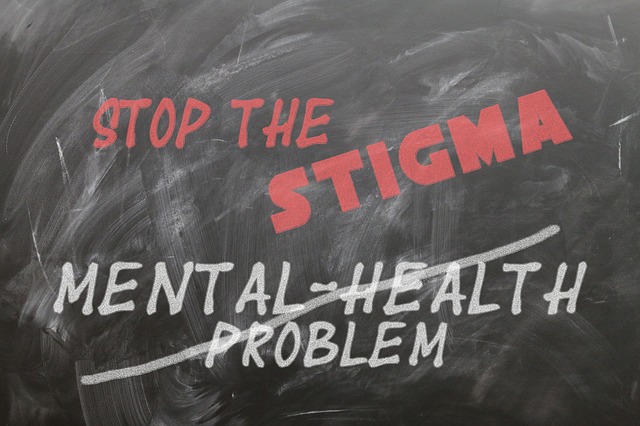
It’s common for stigma and unhelpful judgements to be attached to those with “mental health” issues. 

If one has a body, one will have some kind of physical health issues. Likewise, if one has a mind, then one will also have some kind of mental health issues. None of us are immune to this are we?

I sometimes prefer to use different terms to describe some of our common mental health diagnoses to reduce stigma, judgements, or to offer an alternative description of the problem perhaps.  It can normalize it to some extent. 

Borderline Personality Disorder to “Emotional Personality”

Attention Deficit Disorder to “Curious and Distractible Personality”

Depression/anxiety to “Adjustment issues with stress response”

ODD to “Inner compass personality”

ASD to “Logical or a more emotionally defused personality style”. 

I also find these especially helpful when taking a transdiagnostic approach to treat mental health issues.

Sunday, October 4, 2020

Are you an inner compass person or an outer compass person?


Part of counseling is to help folks to understand self, and to fully accept self, the good and the bad. 

Are you an “inner compass” person or an “outer compass” person?

In other words....

1. Do you tend to make decisions or take actions based on your own inner feelings, principles/values (inner compass) OR

2. Do you tend to make decisions or take actions based on the feelings, principles/values of others (outer compass)?

Each has its pros and cons.

The “outer compass” folks are great at trying to create outer harmony by pleasing others, making them happy, being pragmatic, trying to fit in, but if excessive, they can “lose themselves” in the process. This can create a lot of inner disharmony and unhappiness. Some may refer to this as “moral injury” in some context. 

The “inner compass” folks are very good at knowing who they are, and living life true to who they are. However, if one is not careful, it can create a lot of friction for themselves if the outer compass is too different to the inner compass, leading to maladaptation.

In counseling, we often see the “extreme outer compass” folks, and the “extreme inner compass” folks. Outer compass folks have to learn to be a bit more inner compass, and the inner compass folks have to learn to be a bit more outer compass perhaps, in order to adapt better.

Which one are you bias towards? The inner compass or the outer compass?

Have you ever gone from one extreme to the other? Have you ever been able to find that elusive sweet spot, in order to balance your inner and outer compass? How can you learn to be more of one or the other?

I often view it like left handedness and right handedness. The reality is that we all use both “inner and outer compasses”, but there may be a bias towards one over the other.

School and parenting expect us to be more outer compass as a general rule. So I often see those children with “extreme inner compass” struggle here, leading to adjustment issues with fight/flight stress responses, which then may lead to a number of diagnoses, including ASD, ODD etc. “Extreme outer compass” kids are vulnerable at school too, especially with peer pressure, and if they find themselves in the “wrong crowd”. They are also more vulnerable to the judgement of others. 

For those with a partner, your partner will tend to be the opposite. So naturally, you will learn the opposite, although it can be quite annoying, as this may not be your natural tendency. Inner compass folks will be perplexed at why the outer compass folks worry about what other thinks, and outer compass folks are perplexed at why the inner compass folks are so stubborn.

Furthermore, when one is experiencing a negative outcome from following the outer compass, one can make a “sharp switch” to the inner compass in a more reactive way. This may cause problems. Of course, this can also be done in a more healthy, intentional way, through skills in Acceptance Commitment Therapy (ACT). 

One can use inner compass effectively, or ineffectively. The same as the outer compass. If one use the outer compass in the wrong way, it can seem “out of context” or unauthentic. If one uses the inner compass in the wrong way, it can come across entitled or selfish.

Acceptance Commitment Therapy (ACT) focuses more on the inner compass. What’s our values, and how can we take committed actions towards these values. Empathy training and social skill training are a little more about the “outer compass” perhaps. To do well in life, we need both don’t we? Having said that, life is a team sport. As long as we have those elements in our team, we don’t have to do or be everything, although there needs to be awareness and appreciation.

Tuesday, August 25, 2020

Do you have a more zoomed-in or zoomed-out perspective to life?


What do you see in this photo?

The point is, when we are too zoomed in, it’s hard to see the bigger picture. 

In counseling/Acceptance Commitment Therapy, one of the most important thing is to educate our patients around the concept of fusion and defusion or in other words, zoomed-in (+hook onto thoughts) or zoomed-out (+unhook from thoughts) perspectives. 

It’s like when you zoom into a forest, you can see a dead tree, but when you zoom out, you may see a beautiful lushed tropical forest. Nothing has changed but your perspective has. 

Many folks we see have a very zoomed-in or “fused” perspective to life eg folks with depression, anxiety, or personality disorders. 

Some folks we see have a very zoomed-out or “detached” perspective to life and so zoomed-out, that it is out of focus. Think ASD or even Dissociative Disorders when in “extreme”. 

Of course, life is very dynamic and requires us to zoom in and zoom out all the time depending on context. The problem is when this zoom function malfunctions.  Imagine having a camera without the ability to zoom in and zoom out in order for us to focus.  It would be quite frustrating. 

Part of counseling is to help folks to zoom in and zoom out in various context through active listening, reflection, validation, and “gentle” challenge. 

Using metaphors like these can help us explain abstract concepts to our patients in more digestible ways.

The more zoomed-in folks may have to learn how to zoom out more through meditation, mindfulness etc, and the zoomed-out folks may have to zoom in more to gain more empathy, passion, and connection in life perhaps. 


Thursday, December 12, 2019

Short video on how to approach and help children with behavioural concerns


As a Family Doctor, it is very common for me to see parents who are concerned about their children's mood and behaviours. This can cause a lot of stress for the family. In this video, I have outlined a simple approach on how to assess these sort of problems, and discussed a simple framework on how we can assess and find ways to help these families and their children. I often describe it as the "What, Why, and How to improve" approach.

Sunday, March 1, 2015

"My child has been diagnosed with Austism/Asperger's, so now what?" Workshop for parents.


Venue:  Priority Health Medical Centre Shop145 Orion Shopping Centre
             1 Main St Springfield Central 4300
             Seminar Room

Time:  Tuesday 7 April 2015
            930am-11am


Friday, November 18, 2011

A Moment With Our Guest Clinical Psychologist Dr Michelle Garnett West End Brisbane on "What advice would you give to a newly diagnosed adult who has Asperger's Syndrome?"


Accept and celebrate the person you are.  Forgive the people who could not give you the diagnosis earlier or who did not understand you, or still do not understand you.  It is their loss.  Enjoy the process of self-discovery and move forward with self-appreciation and love.

Dr Michelle Garnett
Director and Clinical Psychologist
MINDS & HEARTS
A Specialist Clinic for Asperger's Syndrome and Autism
http://www.mindsandhearts.net/

Wednesday, November 9, 2011

"Once a peach, always a peach"


"Once a peach, always a peach".

"Once a what?" you might ask.

I often use this phrase when I refer to a temperament of a child.  The temperament of a child is their "innate personality", and it is something that I believe, you cannot change, or at least, cannot change easily.

Just like a peach, you cannot change it into an apple. What you can do though, is to accept it, work with it, and maximize its potential.

So like your child, accept them for who they are, love them and understand them, nurture their strengths and manage their weaknesses, and ultimately, this will maximize their potential.

This is in essence what we try to do in ACT...Acceptance Commitment Therapy.


Note: If you have child with ASD, then the ACT approach can be very useful.  I encourage you to talk to your Doctor, Psychologist or Counsellor about this. 

Wednesday, October 19, 2011

A Moment With Dr Michelle Garnett Clinical Psychologist West End Brisbane on "What advice would you give to a parent of a newly diagnosed young child with Asperger's Syndrome?"


Cultivate acceptance and optimism, there is a good reason and good evidence to be optimistic.  Learn.  Grow.  As Rudy Simone says, "Give your child some B.A.L.L.S." - Belief, Acceptance, Love, Like, and Support.


Dr Michelle Garnett
Director and Clinical Psychologist
MINDS & HEARTS
A Specialist Clinic for Asperger's Syndrome and Autism
http://www.mindsandhearts.net/

Sunday, September 18, 2011

"My child was diagnosed with Asperger's Syndrome....Now What?" written by our Guest Psychologist Dr Julia Becker Waco Texas USA


Parents want the best for their children. When a child is born, mom and dad imagine a future, make plans, and talk about all the wonderful adventures they will have with their child.

Rarely does this imagined future contain serious illnesses, learning disabilities, and major struggles. When a child is diagnosed with a mental or physical disability, parents are left trying to understand what this means for their child’s future and how they will cope with the difficulties. It is then that parents have to revise their plans for the child’s future and accept that the future may look different that they had planned.

Asperger’s Syndrome is a neurological condition that affects both children and adults. Common symptoms include difficulty with social functioning and communication, difficulty with emotional regulation and executive functioning, difficulty adapting to changes in routine, and obsessive interest in certain subjects. People with Asperger’s do not easily pick up on social signals and have a difficult time understanding things within a social context. As a result of these difficulties, they are often described as socially awkward.

Asperger’s is often diagnosed during childhood. There are several things parents should consider after their child is diagnosed with Asperger’s Syndrome:
  • Individual counseling is often recommended for children with Asperger’s. Children may struggle with feelings of isolation and social anxiety. They may also experience high stress levels because they have to work harder than their peers to understand communication and social issues.
  • Many psychologists also refer their Asperger’s patients to social skills groups. Typically these groups consist of about 5-10 children close to the same age who have Asperger’s syndrome. Children receive social support by talking about their difficulties, and the group is also a place for children to practice social skills.
  • Parents can help buffer children’s stress by showing unconditional acceptance of the child. This acceptance is important when the child is teased or rejected by peers, or when the child says or does something socially inappropriate that embarrasses their parents. Instead of receiving sharp criticism, these children will benefit from gentle explanations of why the behavior was inappropriate, followed by a discussion of more appropriate alternative behaviors.
  • Because children with Asperger’s rely heavily on routines and predictability, they may have difficulty adapting to life changes. Such changes may include divorce, relocation, changing schools, and going away to college. Parents can help prepare their children for such changes by asking direct questions about their children’s concerns. Questions may include: “What are your biggest concerns or fears about this change?” “What do you hope things will be like after this change?” “How can I make this change easier for you?”
  • Finally, parents can consider seeking their own social support. Look for support groups for parents of children with Asperger’s or other disabilities. If there are no groups available, consider starting one yourself using meetup.com or another site. Parents may also benefit from individual counseling to learn to cope with feelings of sadness, anxiety, stress, and frustration that may come up.

Dr Julia Becker
Licensed Psychologist Waco Texas USA
http://www.psybecker.com/
http://www.beckerpsychology.blogspot.com/

Saturday, July 9, 2011

Causes of Children's Behavioural Problems


Generally, my approach to assessing behavioural problems in kids (or adults) is to assess the causes:
  1. Is it their personality or genetic trait? (Unfortunately we cannot really change it but certainly we can try to understand it and work with it).  One of the Eastern Philosophy is that, if you are a peach, then always a peach.  You can add syrup to it, you can poach it, you add flavour enhancers to it but it's still a peach.  The moral of the story is that you can still bring out the best version of itself, but you cannot change its core nature.
  2. Is it their environment? For example, is it their interactions with the parents, teachers, school, friends, or other environmental factors.
  3. Is it due to any medical problems e.g. their physical wellbeing.  Do they have a hearing problem?  Do they have sleep apnea?  Your Doctor will to fully assess your child and need to rule these out.
  4. Is there any specific mental health issues like ADHD, Anxiety, Depression, Asperger's, Autism, Learning Difficulties, Oppositional Defiant Disorder (ODD), Conduct Disorders, Sensory Processing Disorders etc....(Careful not to over-diagnose here).
  5. For teenagers and adults....Is there any alcohol/drug use?
From a Doctor's perspective, we need to carefully assess all the above factors and manage accordingly.

Saturday, June 18, 2011

Parenting someone with Asperger's....Can Asperger's traits be helpful?


There is good and bad in everything.  Having Asperger's traits can be helpful, as long as we are aware of the strengths, accept and manage the weaknesses.

People with Asperger's have a more "emotionally detached" approach to life.  They may have less empathy, or may have a lot of empathy but cannot not express it easily.  Although, this may not help them socially, it may sometimes help them to succeed in certain fields where being more emotionally detached is beneficial, like surgery, computers, pathology, law, arm forces to name a few.  Imagine if you are very empathetic and "feels" everyone's feelings, then how can you thrive in trauma surgery or in law, where you have to send a mother of five to jail.

One of the key approaches to managing Asperger's is Acceptance and Commitment Therapy (ACT).  Accept what you cannot change, and change what you can, and cultivate values driven actions.


Tuesday, June 7, 2011

Asperger's and How it can lead to Depression and Anxiety


Asperger's is a developmental condition whereby a person has a "pervasiveness" or a "detached manner", which can often affect their social life.  Hence, this can be very stressful for the individual and their family, as it can affect relationships.  Of course, in order to diagnose Asperger's or Autism, there are many other criteria but the "pervasiveness" is one of the main features.

There are some thought that it is related to a lack of empathy.  However, some recent research suggest that this may not be totally true.  Could they have too much empathy but are unable to regulate it?  In any case, the cause is still unclear.

Part of managing this problem is to accept it for what it is.  Everything in life has its good and bad.  A piece of steel is strong and rigid, but it is NOT flexible.  Out of something good, there is something bad, and out of something bad, there is always something good.

Having Asperger's or Asperger's traits has its benefits too.  For example, it has its advantages in professions that require one to be more emotionally detached e.g. a lawyer, judge, surgeon, engineering, IT, researcher or soldier.

Part of the ACT (Acceptance Commitment Therapy) approach, is to embrace it, and channel it into something useful rather than to fight it or fix it.  Sometimes, one cannot fight force with force.  It might be better to embrace it, and then channel it into something more helpful.  It is more like "surfing" through life rather than "battling" through it.