Showing posts with label Oppositional Defiant Disorder ODD. Show all posts

Saturday, March 18, 2023

Exploring alternative perspectives to common mental health labels


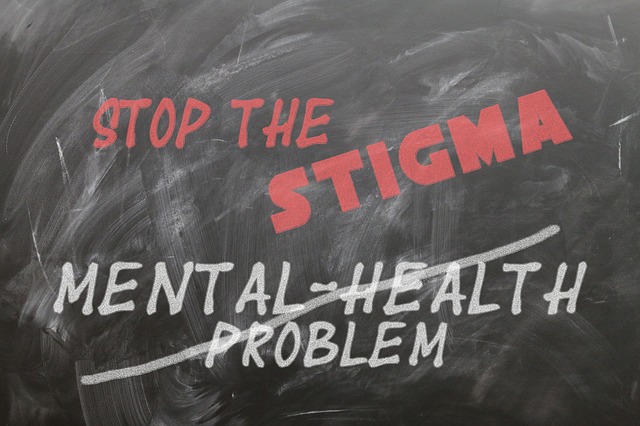
It’s common for stigma and unhelpful judgements to be attached to those with “mental health” issues. 

If one has a body, one will have some kind of physical health issues. Likewise, if one has a mind, then one will also have some kind of mental health issues. None of us are immune to this are we?

I sometimes prefer to use different terms to describe some of our common mental health diagnoses to reduce stigma, judgements, or to offer an alternative description of the problem perhaps.  It can normalize it to some extent. 

Borderline Personality Disorder to “Emotional Personality”

Attention Deficit Disorder to “Curious and Distractible Personality”

Depression/anxiety to “Adjustment issues with stress response”

ODD to “Inner compass personality”

ASD to “Logical or a more emotionally defused personality style”. 

I also find these especially helpful when taking a transdiagnostic approach to treat mental health issues.

Sunday, October 4, 2020

Are you an inner compass person or an outer compass person?


Part of counseling is to help folks to understand self, and to fully accept self, the good and the bad. 

Are you an “inner compass” person or an “outer compass” person?

In other words....

1. Do you tend to make decisions or take actions based on your own inner feelings, principles/values (inner compass) OR

2. Do you tend to make decisions or take actions based on the feelings, principles/values of others (outer compass)?

Each has its pros and cons.

The “outer compass” folks are great at trying to create outer harmony by pleasing others, making them happy, being pragmatic, trying to fit in, but if excessive, they can “lose themselves” in the process. This can create a lot of inner disharmony and unhappiness. Some may refer to this as “moral injury” in some context. 

The “inner compass” folks are very good at knowing who they are, and living life true to who they are. However, if one is not careful, it can create a lot of friction for themselves if the outer compass is too different to the inner compass, leading to maladaptation.

In counseling, we often see the “extreme outer compass” folks, and the “extreme inner compass” folks. Outer compass folks have to learn to be a bit more inner compass, and the inner compass folks have to learn to be a bit more outer compass perhaps, in order to adapt better.

Which one are you bias towards? The inner compass or the outer compass?

Have you ever gone from one extreme to the other? Have you ever been able to find that elusive sweet spot, in order to balance your inner and outer compass? How can you learn to be more of one or the other?

I often view it like left handedness and right handedness. The reality is that we all use both “inner and outer compasses”, but there may be a bias towards one over the other.

School and parenting expect us to be more outer compass as a general rule. So I often see those children with “extreme inner compass” struggle here, leading to adjustment issues with fight/flight stress responses, which then may lead to a number of diagnoses, including ASD, ODD etc. “Extreme outer compass” kids are vulnerable at school too, especially with peer pressure, and if they find themselves in the “wrong crowd”. They are also more vulnerable to the judgement of others. 

For those with a partner, your partner will tend to be the opposite. So naturally, you will learn the opposite, although it can be quite annoying, as this may not be your natural tendency. Inner compass folks will be perplexed at why the outer compass folks worry about what other thinks, and outer compass folks are perplexed at why the inner compass folks are so stubborn.

Furthermore, when one is experiencing a negative outcome from following the outer compass, one can make a “sharp switch” to the inner compass in a more reactive way. This may cause problems. Of course, this can also be done in a more healthy, intentional way, through skills in Acceptance Commitment Therapy (ACT). 

One can use inner compass effectively, or ineffectively. The same as the outer compass. If one use the outer compass in the wrong way, it can seem “out of context” or unauthentic. If one uses the inner compass in the wrong way, it can come across entitled or selfish.

Acceptance Commitment Therapy (ACT) focuses more on the inner compass. What’s our values, and how can we take committed actions towards these values. Empathy training and social skill training are a little more about the “outer compass” perhaps. To do well in life, we need both don’t we? Having said that, life is a team sport. As long as we have those elements in our team, we don’t have to do or be everything, although there needs to be awareness and appreciation.
Thursday, December 12, 2019

Short video on how to approach and help children with behavioural concerns


As a Family Doctor, it is very common for me to see parents who are concerned about their children's mood and behaviours. This can cause a lot of stress for the family. In this video, I have outlined a simple approach on how to assess these sort of problems, and discussed a simple framework on how we can assess and find ways to help these families and their children. I often describe it as the "What, Why, and How to improve" approach.

Thursday, August 4, 2011

What is the main principle of parenting?


Parenting is one of the hardest job in the world, so investing more time in this area is definitely worthwhile for ourselves and our children's well-being.  The best part is that if we become more effective parents, then our stress levels will go down, and there is good evidence, that this will also help with depression or anxiety.

So what is the "best" way?

Depends is probably the best answer, but let's look at the general principles.

I often ask my patients to reflect on what kind of parents they are.
  • Are you passive?  With this style, you may "go with the flow".  You may be warm, nurturing, caring, but lacks the assertiveness or the ability to set clear boundaries for your children.
  • Are you authoritarian? With this style, you tend to expect them to follow strict rules and regulations, and if they don't, there is usually some form of consequences.  It is more of a "military" style of parenting.
  • Are you somewhere in between, and some may refer to this as the "balanced" type.
  • Do you tend to be passive and then, when things get out of hand, become more authoritarian, and when you feel sorry for your children, you swing back to being passive again?
Can you relate to any of the above?

There are pros and cons with any of the above strategies.  The question is, which one is more helpful for you and your family?

In my opinion, the nurturing, caring, and responsive approach, is the foundation of good parenting.  It is about building that relationship.  Just like building a house, you need to have a good foundation.  A house without a good foundation might be okay for a short period of time, but eventually, will probably collapse.  At the same time, building a house requires erecting a good roof and walls, and this is analogous to the "discipline" part of parenting.

So in essence, both are very important, but my general advice here is to focus on the relationship as the core parenting strategy.  Then reinforce this with behavioural strategies to help with the assertive discipline for your child.  From my clinical experience, parents tend to search for good parenting techniques on discipline, but do often forget to focus on what is also extremely important, which is, to develop that good, loving relationship with your child as highlighted above.

Most parents will understand that if you are too "passive" without the assertive discipline, then the child may go "off the rails".  On the other hand, if you are too authoritarian, you may have a rebellion on your hands.  In my opinion, without a good relationship as your foundation, it is often difficult to implement effective, assertive discipline, without giving the wrong message.  Imagine a child who does not "feel loved", and you ground him/her as a consequence.  What message are we giving him/her?  Is it "Mum and dad hates me and it is so unfair." or is it, "I have done something wrong and now I have to live with that consequence. I will try better next time?"

Saturday, July 9, 2011

Causes of Children's Behavioural Problems


Generally, my approach to assessing behavioural problems in kids (or adults) is to assess the causes:
  1. Is it their personality or genetic trait? (Unfortunately we cannot really change it but certainly we can try to understand it and work with it).  One of the Eastern Philosophy is that, if you are a peach, then always a peach.  You can add syrup to it, you can poach it, you add flavour enhancers to it but it's still a peach.  The moral of the story is that you can still bring out the best version of itself, but you cannot change its core nature.
  2. Is it their environment? For example, is it their interactions with the parents, teachers, school, friends, or other environmental factors.
  3. Is it due to any medical problems e.g. their physical wellbeing.  Do they have a hearing problem?  Do they have sleep apnea?  Your Doctor will to fully assess your child and need to rule these out.
  4. Is there any specific mental health issues like ADHD, Anxiety, Depression, Asperger's, Autism, Learning Difficulties, Oppositional Defiant Disorder (ODD), Conduct Disorders, Sensory Processing Disorders etc....(Careful not to over-diagnose here).
  5. For teenagers and adults....Is there any alcohol/drug use?
From a Doctor's perspective, we need to carefully assess all the above factors and manage accordingly.